Case study · Low-power sensing
Five years
on one coin cell
iRay is an ultra-low-power time-of-flight sensor for facility operations. It counts, measures and reports for five years without a battery change.
Data from places
without power
Facility teams wanted to know when consumables were running low and how people moved through their spaces — in washrooms, corridors and event areas where there is no wiring and no one wants a camera.
That meant a sensor small enough to mount anywhere, private by design, and able to run for years without anyone opening it to change a battery.
How we built it,
phase by phase
One team owned the electronics, firmware, power budget and enclosure — so every decision could be made against the five-year target.
A power budget before a parts list
Every component was chosen against a five-year target on one coin cell, so the battery decided the architecture rather than the other way round.
Sensing only when it matters
Time-of-flight sensing on Nordic silicon, duty-cycled so the sensor and radio sleep for almost all of their life and wake only to measure and report.
An enclosure made to be moulded
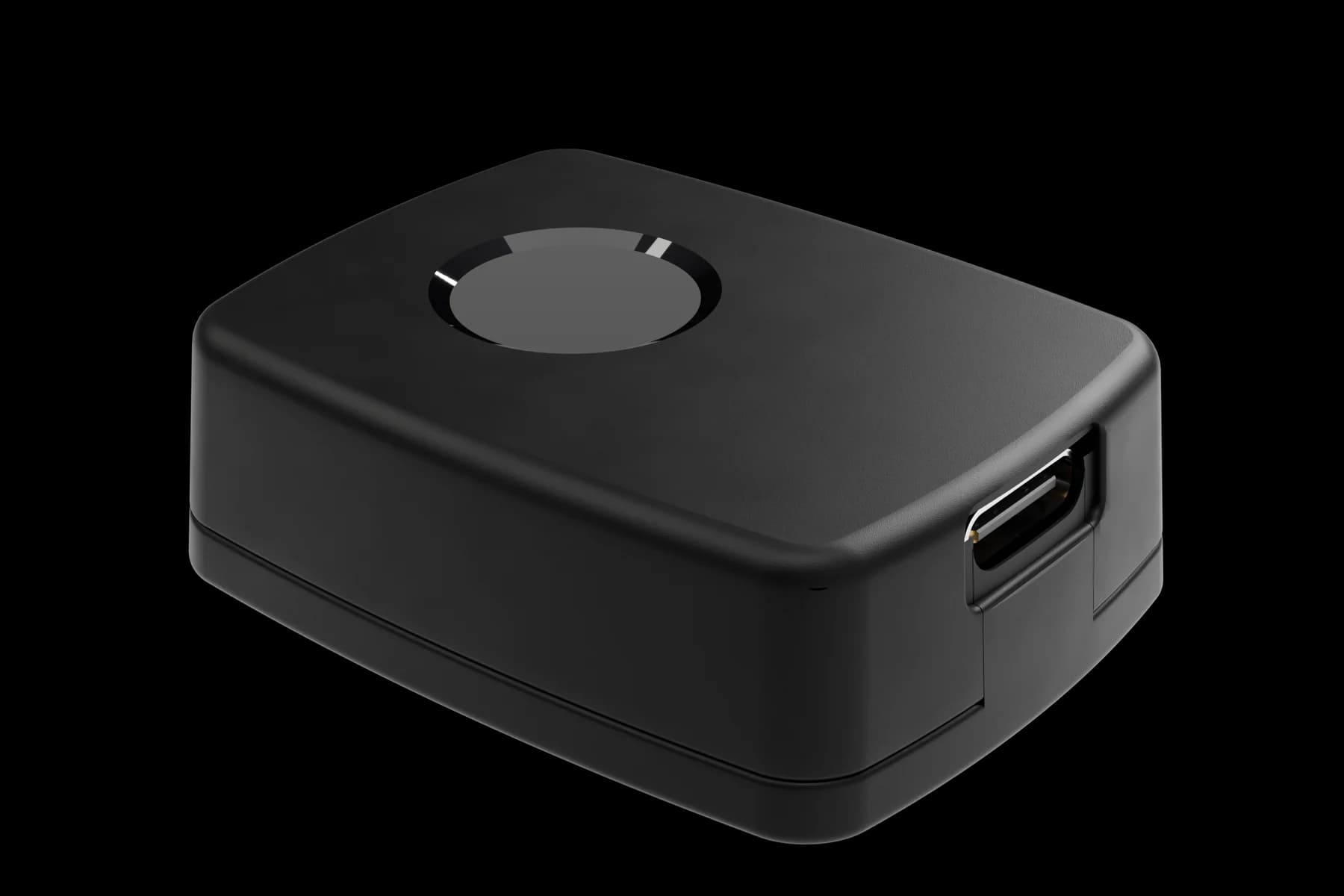
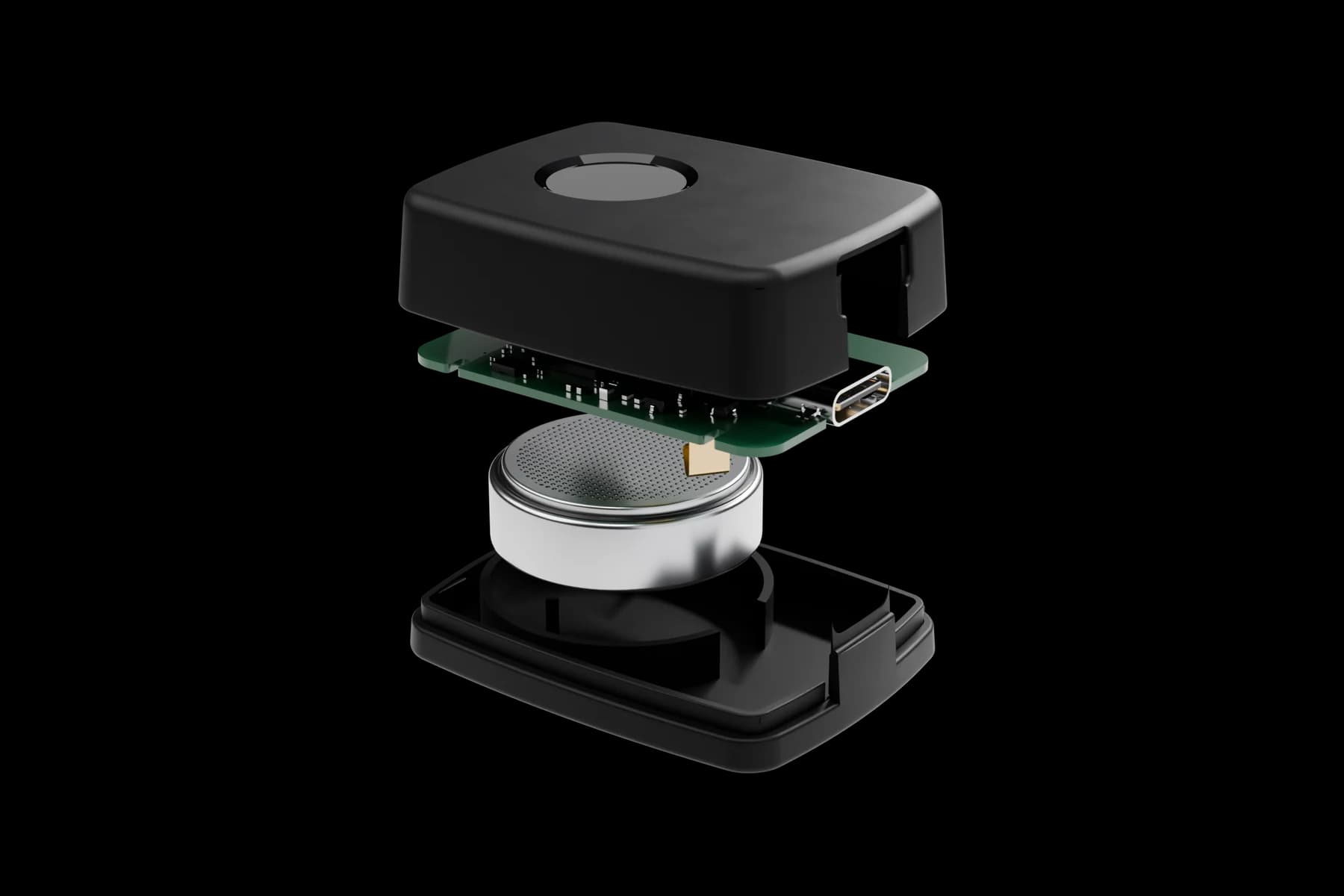
Two injection-moulded halves snap together and hold the cell between them — no screws — with the sensor window moulded in as a glossy lens.
Data facility teams can act on
Readings become consumables alerts and visitor-flow insights for the client’s facility operations.
Product images
Spec sheet
The production design, as shown in the model above.
| Dimensions | 42.5 × 32.5 × 13.5 mm |
| Sensing | Time-of-flight distance sensor (ST VL53L1X) |
| Platform | Nordic Semiconductor wireless SoC |
| Power | CR2477 3 V lithium coin cell |
| Battery life | 5 years |
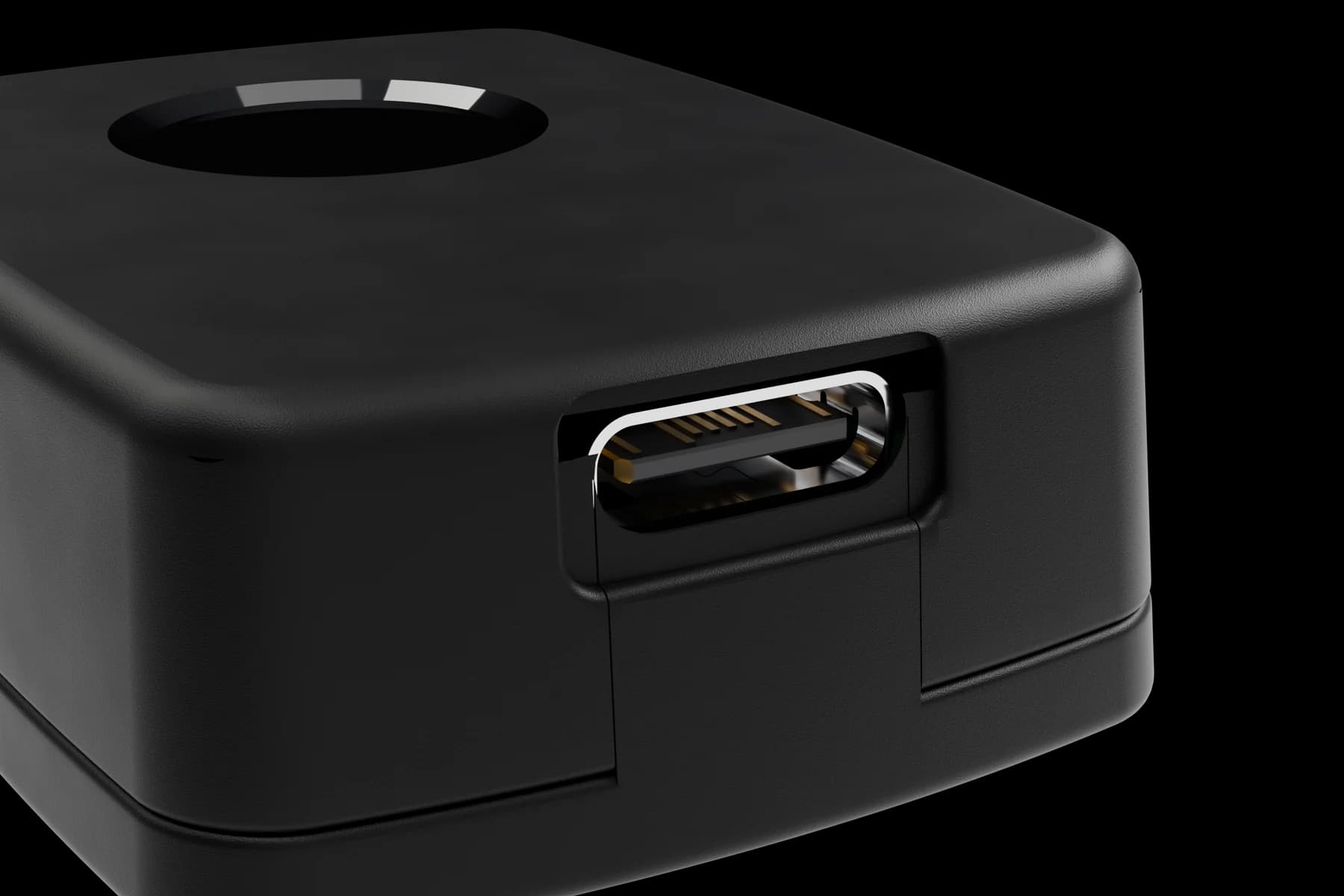
| Connector | USB-C, in a recessed, filleted pocket |
| Enclosure | Injection-moulded, satin black, two-part snap fit |
| Lens | In-mould gloss window, 14 mm |
Free engineering review
Building something that runs on a battery?
Send us your power target and what the device needs to do. We will tell you whether it is achievable — and how.