Case study · Privacy-first sensing
Room occupancy,
without a camera
iThermal tells facility teams which rooms are really in use, using thermal sensing instead of cameras. Privacy and GDPR compliance were designed in from the first schematic.
Booked rooms,
empty chairs
Workplaces wanted to know which meeting rooms were actually used — to free up booked-but-empty rooms and plan space on evidence.
But cameras, and anything that can identify a person, are a non-starter in offices under GDPR. The sensor had to answer “is someone here?” and nothing more.
How we built it,
phase by phase
Privacy was treated as an engineering requirement, so every decision — sensor, firmware, data and enclosure — was made against it.
Privacy as a requirement
Only anonymous presence data is designed to leave the device — no images, no identities. Every later decision was checked against that rule.
Sensing people, not faces
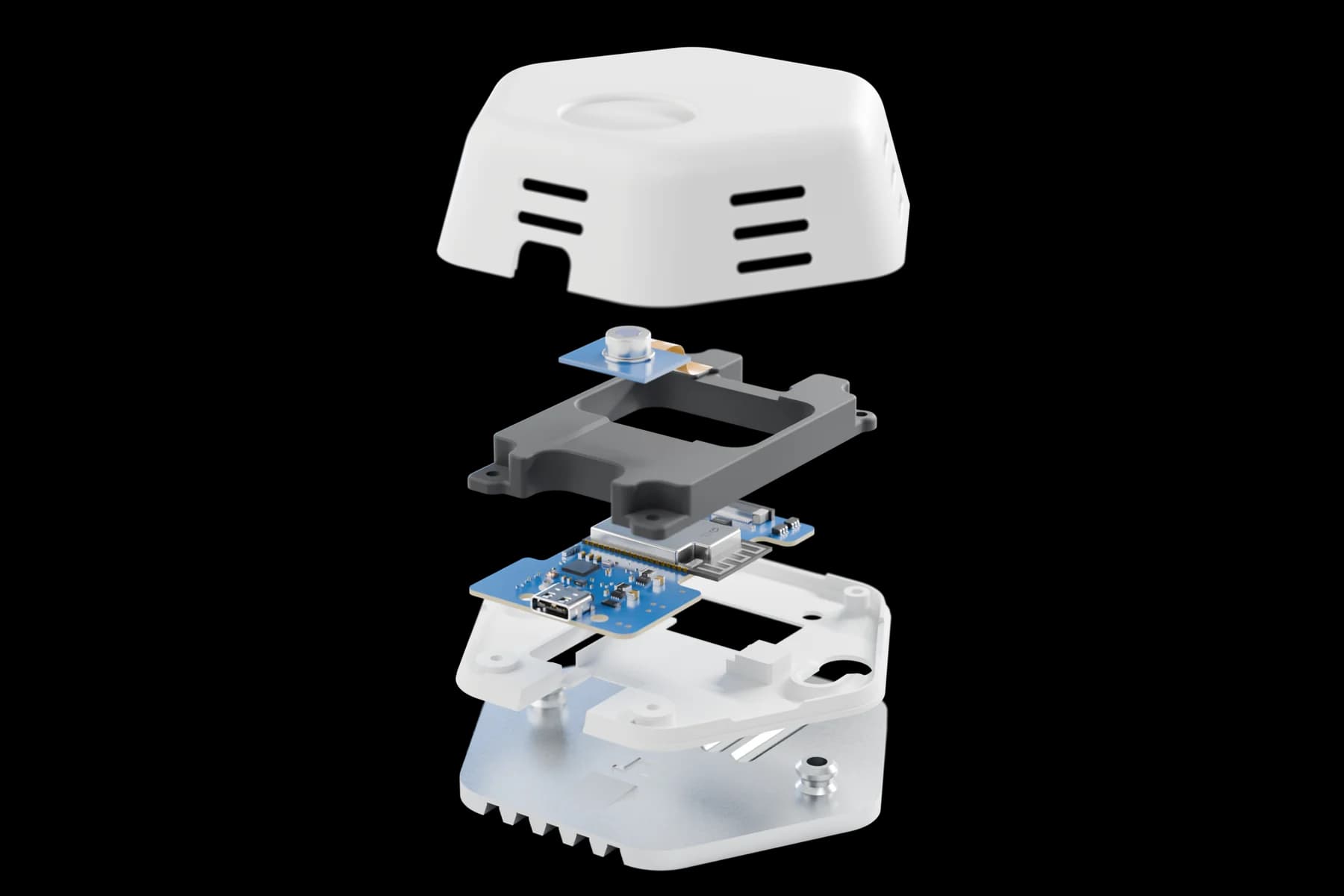
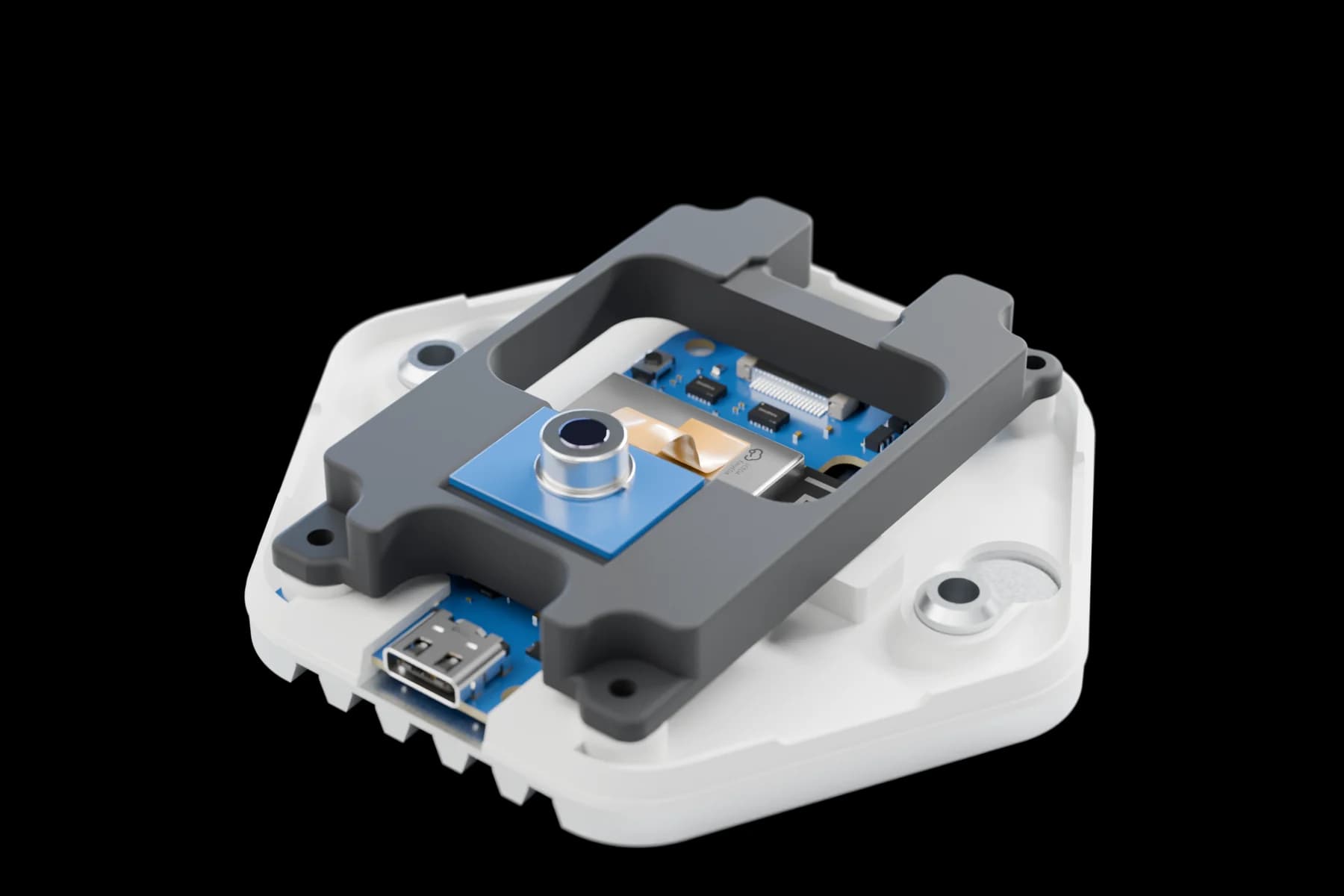
A thermal sensor looks into the room through a translucent IR window, detecting presence without capturing anything that identifies who is there.
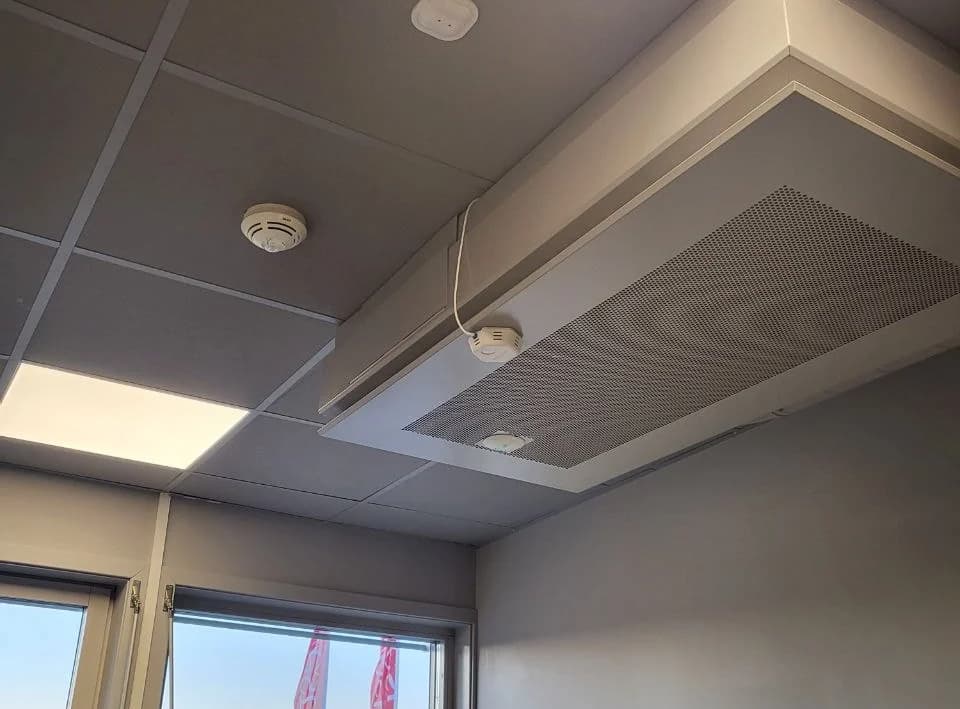
Made for meeting-room ceilings
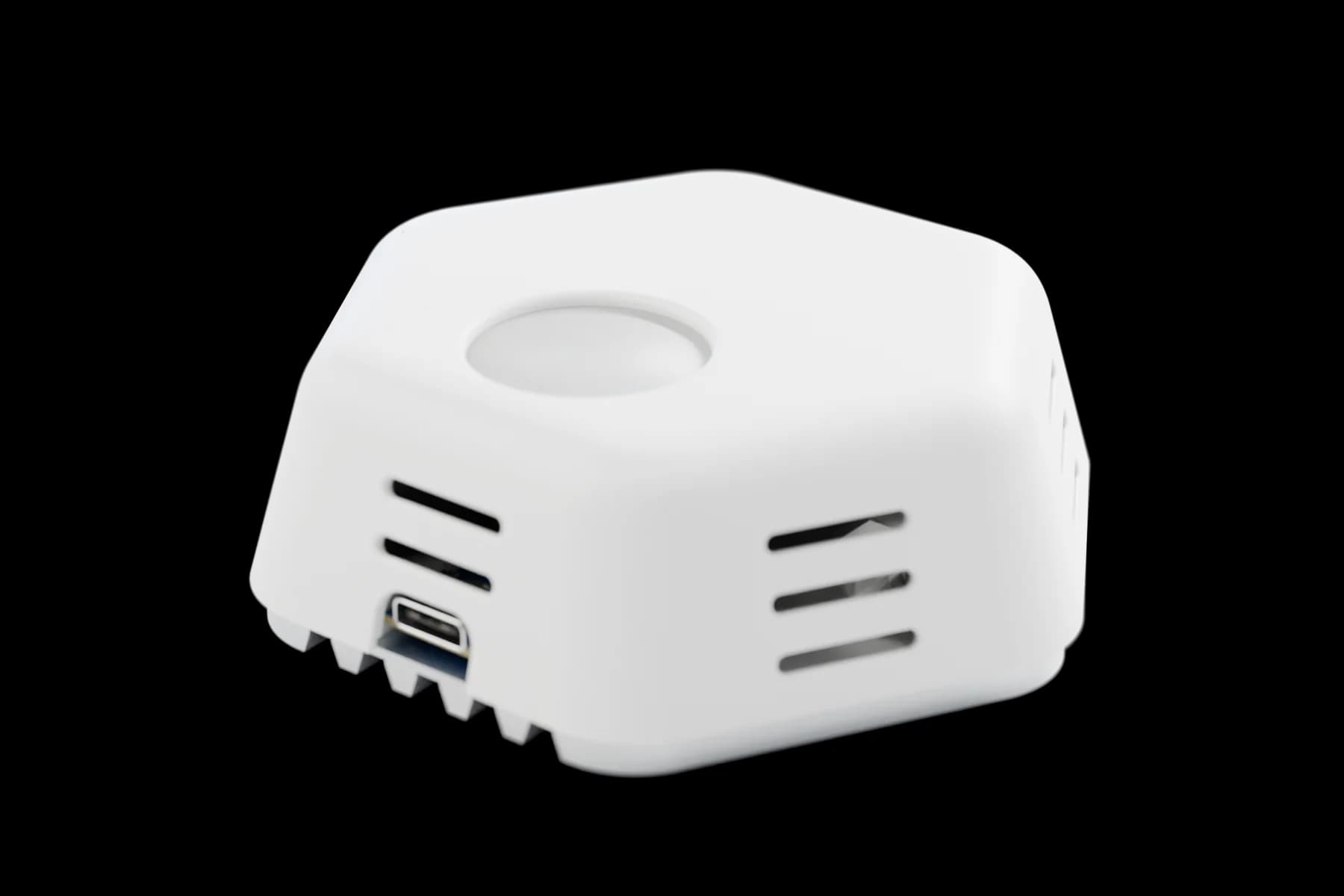
A white, vented ABS enclosure on a steel ceiling bracket, powered over USB-C. A dedicated bracket holds the sensor directly under the window.
Occupancy data for facilities
Anonymous occupancy data travels over Wi‑Fi to facility systems, so teams see how rooms are really used.
Product images
Spec sheet
The production design, as shown in the model above.
| Dimensions | 92 × 83 × 29 mm, including the ceiling bracket |
| Sensing | 20 × 15 thermal sensor, under a 24 mm aperture |
| Window | Translucent white IR film, 31 mm, seated in a recess under the cover |
| Radio | ESP32 for Wi‑Fi, plus nRF52840 for BLE, Thread and Wirepas |
| Power | USB-C |
| Enclosure | White ABS cover and base, vented on every side |
| Mounting | Steel ceiling bracket; keyhole slots in the base |
| Privacy | No camera; only anonymous presence data leaves the device |
Free engineering review
Sensing that has to respect privacy?
We design products where compliance is an engineering requirement from day one, not a late-stage checklist.